
Funding a Buy-Sell Agreement
A buy-sell agreement is the contract among shareholders that decides what happens to a departing shareholder's shares, and funding is the separate question of where the money comes from to carry it out. The agreement settles the triggers, who buys, how the price is fixed, the timeline, what the family receives and how the money is produced, and it is drafted by a lawyer or a notary with the corporation's CPA in the room. Funding follows it. The two classic structures are the criss-cross, where each shareholder owns a contract on the other lives, and the corporate-owned or promissory structure, where the company holds the contracts and the adjusted cost basis under section 148(9) and the capital dividend account under section 89(1) enter the analysis. A life contract funds one trigger, which is death, and does nothing for a living departure. It is insurance and it is not an investment, nothing here is tax or legal advice, and an obligation with no funding attached is a promise and not a plan.
Two people own a company in equal shares, and each of them assumes the other will still be there next year. That assumption holds for years and then it stops, because one shareholder dies, falls ill, retires, separates, or decides the business is no longer the one he wanted. On that day the company has a new part owner, and it is usually somebody who has never worked in it.
This page is about the document that decides what happens next, and where the money comes from to carry it out. The document is a buy-sell agreement. The money is the funding. Insurance appears in the second half of that sentence and never in the first, and a page that reverses the order is selling before it has explained anything.
What is a buy-sell agreement, and what does it have to settle?
A buy-sell agreement is the contract among shareholders that decides what happens to a departing shareholder's shares. It settles six things: which events count as a trigger, who is obliged to buy, how the price is fixed, the timeline for payment, what the family of the departing shareholder receives, and how the money will be produced.
The triggers are the events that start the machinery. Death is the one every shareholder remembers. Permanent disability, the diagnosis of a listed illness, retirement at a stated age, a divorce that puts a former spouse on the share register, and a shareholder who simply wants out are all departures. An agreement contemplating death alone has covered the event easiest to fund and left the ones that arrive more often.
Price is the clause that ages worst. A fixed figure written in at signing is stale by the third year, and a formula tied to earnings or book value survives longer while still producing numbers nobody accepts. The timeline travels with the buyer: a mandatory purchase binds the survivors and gives the estate certainty, while an option leaves an estate holding shares it cannot sell.
The sixth item is the one this page is about. An agreement that names the trigger, the buyer, the price and the timeline, then says nothing about where the money comes from, has described a transaction without arranging it. The funding clause states what stands behind the obligation: contracts of insurance, a sinking fund, a credit facility arranged in advance, or a promissory note. A lawyer or a notary drafts all six items with the CPA in the room.
Who writes the agreement, and why does it come first?
a notional account, not a bank balance
The Capital Dividend Account
- 01A notional tax account of a private Canadian corporation
- 02It records amounts the corporation received without tax
- 03A death benefit less the adjusted cost basis credits it
- 04Balances can be paid to shareholders as capital dividends
- 05The credit depends entirely on the ownership structure
A lawyer writes it, or a notary in Quebec, with the corporation's CPA in the room for the price mechanism and the tax. It comes first because funding answers a question the agreement asks, and an agreement nobody has written asks nothing. Money that arrives with no document behind it creates an argument where there was none.
The order is not a matter of taste. Until the trigger, the buyer, the price and the timeline are on paper, there is no obligation to size, no date to fund against, and nothing to tell the money what it was for. A contract bought before those terms are settled is a sum of money with no instructions attached.
The drafting conversation is where the awkward questions get asked while everybody is still on good terms. What counts as a departure. Who is obliged to buy and who merely has the option. How long they have to pay. Those answers are cheap to reach in a boardroom and expensive to reach in a courtroom.
This practice does not draft the agreement and does not give tax advice, and neither question gets settled here. What a licensed Financial Security Advisor can do is describe how an obligation of a stated size, payable on a stated event, is commonly funded, then hand the file back to the lawyer and the CPA who decide it. Anyone who says the agreement can be sorted out later has the order backwards.
What happens when an obligation has no funding attached?
The obligation survives and the money has to be found somewhere else. The surviving shareholders borrow against a company that has just lost an owner, or they pay the estate out of future profits over years, or they renegotiate the whole arrangement at the worst possible moment with people who have just come from a funeral.
An obligation with no funding attached is a promise and not a plan. The distinction matters because the document reads identically either way. A clause saying the surviving shareholders shall purchase a deceased shareholder's shares at fair market value within one hundred and twenty days looks the same whether the money exists or does not.
Credit is the usual fallback and it behaves worst under pressure. A lender looks at a company whose key shareholder has died, whose revenue may have been tied to that person, and whose remaining owner now wants to borrow a large sum to buy out an estate. That application is assessed on current numbers in the conditions of that year, and it may be approved, priced higher, or declined.
Paying the estate over time is the second fallback. It needs nobody's permission and converts one obligation into a long one, and a liquidator who wants the estate closed may refuse. A shareholder who has only just bought in carries this obligation from his first week, which is part of what is being signed in partnership buy-in and the year of highest debt.
How does the criss-cross structure work?
Each shareholder personally owns a contract on the life of every other shareholder, pays the premium personally, and is the named beneficiary. On a death, the surviving shareholder receives the proceeds directly and uses them to buy the deceased shareholder's shares from the estate. The money never passes through the corporation.
The attributes follow from that ownership. The death benefit is generally received tax free by a named beneficiary and lands outside the company, away from the company's creditors and from the corporate tax questions entirely. The purchasing shareholder acquires the shares personally, so the adjusted cost base of the shares he already held rises by what he pays for the new ones.
The premiums are paid with personal after tax dollars, which for an owner drawing a salary or dividends from the company means the money has been taxed once already on the way out. Premiums differ by age and by health, so an older shareholder insuring a younger one pays less than the younger pays to insure him. Each contract is re-papered when a shareholder joins or leaves.
Nobody here is going to tell you which structure is right for your company. The criss-cross and the corporate structure are set out at the same length on this page because they are genuinely different arrangements with different consequences, and the choice belongs to the lawyer who drafts the agreement and the CPA who models the tax.
How does the corporate-owned or promissory structure work?
where the structure usually goes wrong
Corporate-owned life insurance
- 01The company owns the contract and pays the premium
- 02Premiums are generally not deductible
- 03The advantage lies in the rate the premium was funded at
- 04A benefit received credits the Capital Dividend Account
- 05Ownership and beneficiary structure is where it fails
The corporation applies for, owns, pays for and is the beneficiary of a contract on each shareholder's life. On a death, the proceeds are paid into the company. The company then either redeems the deceased shareholder's shares or advances the money to the surviving shareholders, who purchase the shares under a promise recorded in the agreement.
The attributes here follow from ownership as well. Premiums are paid with corporate dollars, which for a business taxed at the small business rate is a different pool of money from personal after tax income. The corporation cannot deduct those premiums in the ordinary case, and a narrow exception exists where a policy is assigned as collateral for a loan used to earn income.
One contract per shareholder covers the arrangement however many owners there are, and admitting a shareholder adds one contract without re-papering everybody. Against that, the proceeds sit inside the company where its creditors can reach them, and the value accumulating inside a permanent contract counts as a corporate asset, which touches the small business deduction and the passive income rules.
The promissory structure is a variant worth naming, because agreements often use it. The company holds the contracts and receives the proceeds, and the surviving shareholders, who carry the purchase obligation personally, are lent or paid what they need to complete it. How that money leaves the company is the whole question, and it is where the capital dividend account enters.
What do the adjusted cost basis and the capital dividend account do?
The adjusted cost basis is a tax figure defined in section 148(9) of the Income Tax Act. It rises as premiums are paid and falls as the cost of the insurance is absorbed. When a corporation receives a death benefit, the excess over that basis is credited to its capital dividend account.
Section 89(1) is the provision that makes the credit matter. The capital dividend account is a notional balance and holds no money of its own. What it permits is a dividend elected out of that balance and paid to Canadian resident shareholders free of tax. The portion equal to the adjusted cost basis does not qualify.
Two consequences follow, and both belong to the CPA. The first is that the adjusted cost basis of a permanent contract is not static, so the size of the eventual credit is not static either, and a projection run today stays a projection. The second is that the credit helps only if the company still has capacity to pay a capital dividend when it needs to.
None of that is tax advice and this page cannot be read as any. The provisions are cited so the reader knows what to ask about. How much of a payment can be elected out of the account and when the election has to be filed are questions the corporation's CPA answers on its own numbers before the agreement is signed.
What is a share redemption compared with a purchase by the survivors?
a leveraged strategy, described as one
What an insured retirement plan depends on
- 01A participating contract funded heavily from the start
- 02The contract assigned to a lender as collateral
- 03A line of credit drawn during retirement
- 04The death benefit repays the lender at the end
- 05Everything depends on the lender continuing to lend
A redemption is the company buying back and cancelling the deceased shareholder's shares, so the estate deals with the corporation. A purchase is the surviving shareholders buying those shares personally, so the estate deals with them. The two produce different tax results for the estate, and the choice is made with the CPA.
In outline only, because the detail is not a website's work. On a death, the Income Tax Act treats most capital property as disposed of at fair market value immediately before death under section 70(5), and shares of a private company are capital property. The estate therefore has a capital gain to report, unless a rollover to a surviving spouse or a qualifying spousal trust applies.
Where the shares are then redeemed by the company, the amount paid above the paid-up capital is generally treated as a dividend to the estate and not as the proceeds of a sale, which changes the character of the income and interacts with the capital gain triggered on the death. Where the surviving shareholders buy the shares themselves, the estate has a sale.
Which route an agreement should use is a question with a tax answer and a control answer, settled by a lawyer and a CPA reading the actual share register, the actual paid-up capital and the actual estate position. Agreements sometimes give the corporation a first right to redeem and the shareholders a right to purchase what is left, and that hybrid still has to be drafted and never assumed.
What does a participating contract do here, and what does it not do?
It produces a fixed amount of money on a death, on the date of the death, without a lender's approval and without a sale of anything. That is the whole of the claim. It is life insurance and it is not an investment, and the premium is payable every year whether the event happens or not.
A buy-sell obligation created by a death has a very specific shape. A large sum, payable by one party to another, on a date nobody chooses. A death benefit has the same shape, which is the entire reason the two get put together. It does not depend on the company's earnings that year or on an institution deciding to advance credit.
A participating whole life contract is one form of permanent coverage. The insurer declares dividends annually at the discretion of its board based on the performance of the participating account, and those dividends are not guaranteed. Where they buy paid-up additions, the accumulated value and the death benefit can both grow, which answers a share value growing over those same years.
Now the limits, stated plainly. The contract has to exist before it can do anything, which means an application, medical underwriting and a decision no one can hurry because a shareholder has just been diagnosed. It funds one trigger, and a contract allowed to lapse funds nothing at all. What stands behind it is the contractual obligation of the issuing insurer and that insurer's continued solvency, with Assuris protection inside its published limits.
Why is coverage sized to an old valuation the commonest failure?
Because a company keeps changing value and a coverage amount stays where it was put. Contracts arranged against a valuation from years ago leave the surviving shareholders short of the price the agreement obliges them to pay, and the shortfall lands on the people least able to argue about it that week.
The failure is quiet, which is why it is common. Nothing goes wrong on the day the valuation moves. The agreement still reads correctly, the contracts are in force, the premiums are being paid, and the file looks complete to everybody who glances at it. The gap appears only on the one day the arrangement is used.
The amount therefore belongs in a scheduled review and not in anybody's memory. Once a year, against four figures. What the company is worth on the mechanism the agreement names. What the contracts would pay today. What the difference between those two is. And whether the shareholders are still the same people, because owners marry, separate, move province and change what they want.
Increasing coverage later means being underwritten later, at an older age and with whatever health history has accumulated in between, and it may mean being declined. That is the argument for sizing generously at the outset where the premium can be carried, and for writing the review into the agreement itself so it happens without anybody having to remember.
What changes when there are more than two shareholders?
an irreversible trade, described plainly
What a life annuity exchanges
- Capital is handed to an insurer
- The insurer pays a fixed amount until you die
- It removes the risk of outliving your money
- The capital is generally gone
- The decision cannot be undone
The arithmetic changes and so does the paperwork. With two owners each holds one contract on the other. With four owners a criss-cross needs twelve contracts, and every admission or departure re-papers the set. That is the point at which a trustee holding the contracts for all of the shareholders becomes the common answer.
A trustee arrangement puts one party between the shareholders and the contracts. The trustee is the named owner and beneficiary of a contract on each shareholder's life, holds them under a trust deed drafted alongside the shareholders' agreement, collects the proceeds on a death, and applies them in the proportions the agreement sets.
What that buys is administrative order. One set of contracts, one place where they live, one document saying who gets what, and a change of shareholders handled by amending the deed. What it costs is a further document to draft, a trustee who must still be there in twenty years, and a structure whose tax treatment the CPA has to confirm.
A simpler version exists, which is that the corporation owns every contract and the agreement does the allocating. That is not automatically preferable, because it puts the proceeds inside the company and brings the corporate questions of the earlier sections with it. The choice among these arrangements belongs to the lawyer drafting the agreement and the CPA modelling the tax.
What funds a departure that is not a death?
Something else, because a life contract funds one trigger. A shareholder who retires, who resigns, who separates or who simply wants the capital back presents no insurable event. The agreement has to say how those departures are paid for, and the usual answers are a note, a credit facility, or time.
Disability and critical illness sit between the two cases. Contracts exist that pay a benefit on a defined disability or on the diagnosis of a listed condition, and they can be attached to a buy-sell obligation the way life coverage is. They are underwritten more tightly, and the obligation in the agreement has to match the definition in the contract, never the reverse.
A retirement is the departure most agreements handle worst and the one most likely to happen. A shareholder who wants out at sixty-two, in good health, with a third of the company in his name, is asking the others to find real money out of real profits. Agreements deal with that by giving the buyers time, by requiring long notice, and by allowing instalments with interest and security.
The deadlock clause handles the rest. A mutual buy-sell provision, where one shareholder names a price and the other chooses which side of it to take, produces a resolution without a judge. It is blunt, it favours the shareholder with more cash behind him, and it beats two owners who cannot agree. A funding conversation that has not covered the living departures has covered the easy half.
Who this suits, and who it does not
It suits any incorporated business with more than one shareholder, and the agreement suits all of them without exception. The funding question is narrower, and funding by insurance suits owners who are insurable, whose companies are meant to continue after one of them dies, and where the survivors actually want to own the whole thing.
It suits companies where the numbers are large enough that a forced sale or a five year note would genuinely damage the business, and where the owners would sooner pay a premium every year than find out the answer the hard way. It suits owners who have already had the agreement drafted, because the funding then has something real to attach itself to.
It suits less well a company whose owners intend to sell the business within a few years anyway, because the obligation being funded is short lived and a sale was always the exit. It suits less well a shareholder who is uninsurable, or whose coverage would cost more than the company can carry through a weak year, since a lapsed contract funds nothing.
None of that changes the sequence. The agreement first, drafted by a lawyer or by a notary in Quebec, with the CPA on the price mechanism and the tax. The funding second, shaped by what the agreement actually obliges. The product last, and only once the first two have been done. The corporate structuring underneath all of it, along with its limits and the owners it does not suit, is set out on the business owners page.
A thirty-minute discovery meeting
A first conversation establishes whether this fits. No illustration is prepared and nothing is arranged.
Often the answer is no, and you will hear it during the call rather than in a proposal afterwards.
This form reaches Canadian Wealth Creation Centre Inc. Any meeting, any advice and any insurance product is provided by Canadian Wealth Creation Centre Inc., through its representatives certified by the Autorité des marchés financiers. IBC Financial is the company's education platform: it distributes no product and no financial service, and it gives no individualised advice.
Common questions
What is the difference between a shareholders' agreement and a buy-sell agreement?
Should the corporation own the contracts, or should the shareholders own them personally?
What happens if the agreement obliges a purchase and the money is not there?
How often should the coverage amount be checked?
Sources
- Income Tax Act s.89(1), Capital Dividend Account, Justice Laws Canada, verified 2026-09-14
- Income Tax Act s.148(9), adjusted cost basis, Justice Laws Canada, verified 2026-09-14
- Income Tax Act s.70(5), deemed disposition on death, Justice Laws Canada, verified 2026-09-14
About the author
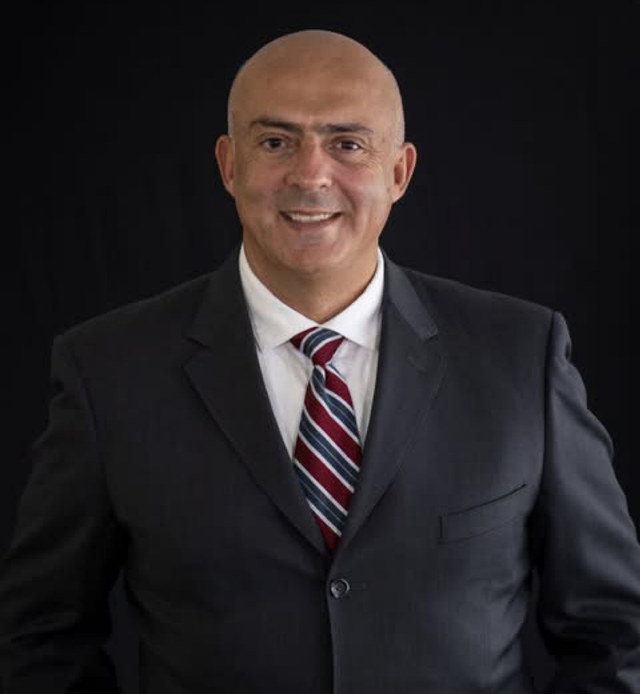
Jose Salloum is a Financial Security Advisor (conseiller en sécurité financière) certified by the Autorité des marchés financiers in Quebec, a Life and Accident & Sickness Insurance Agent licensed by the Financial Services Regulatory Authority of Ontario, and a Life Insurance Agent licensed by the Insurance Council of British Columbia. Licensed since 2001.
He has practised Infinite Banking since 2015 and founded Canadian Wealth Creation Centre Inc., which operates as IBC Financial, in 2016. He holds the Infinite Banking Concepts® Authorized Practitioner certification from the Nelson Nash Institute. That is a private certification rather than a regulatory licence.
IBC Financial is the education platform of Canadian Wealth Creation Centre Inc. This page is general education and not advice on any individual file.
Last reviewed 2026-09-14. By Jose Salloum, Financial Security Advisor.