
Insuring a Child Who Receives Disability Support
Naming a child who receives provincial disability support directly on a life insurance contract can end that support, because Ontario counts the proceeds as income in the month received and then as an asset against a $40,000 limit. Quebec's Programme de solidarité sociale carries a far larger exclusion, so the answer changes at the border. The instrument used instead is a discretionary trust settled by the parent in a will, with the trustee named on the contract.
Naming a child who receives provincial disability support as the direct beneficiary of a life insurance contract is the arrangement most likely to cost that child the support. The money arrives in one sum, the province treats it as income in the month it lands, and whatever is left sits as an asset above a limit the province has set. The contract pays exactly what it was bought to pay. The household loses the thing it was living on.
This page names Ontario and Quebec every time it states a rule, because the treatment of insurance proceeds, of cash surrender value and of trust capital is set by provincial directive and not by federal law. The answer is different in every province and territory, and a page offering one Canadian answer is wrong somewhere. It sits with the rest of the work on financial sovereignty for women, and covers the discretionary trust, the savings plan, the tax credit, the designation and the order they come in.
Canadian Wealth Creation Centre Inc. is a life insurance practice, and what follows is education about mechanisms. It is not advice. The drafting belongs to a lawyer or, in Quebec, to a notary, and the eligibility rules belong to the provincial programme, which publishes and amends them.
Why is the ordinary answer wrong
Life insurance proceeds paid directly to a person who receives provincial disability support are counted against that support. Ontario treats them as income in the month they are received and as an asset from the month after, so a designation naming the child personally can reduce the income support and can end eligibility altogether.
Follow the Ontario sequence slowly. The insurer pays the named beneficiary, so the money reaches the child and no trustee stands between them. Ontario Disability Support Program directive 4.7, on the directives as updated in March 2026, says that proceeds from a life insurance policy "received directly by a recipient" and subsequently placed in trust are "treated as income in the month received unless otherwise exempt."
The month after is where eligibility goes. What remains is an asset, and Ontario directive 4.1, on the directives as updated in March 2026, sets the limits at "$40,000 for a single recipient, $50,000 for a couple and $500 for each dependant other than a spouse." A few hundred thousand dollars sits far above that, and the child stays ineligible until it is spent down.
The income support is not the whole of the loss in Ontario. Eligibility carries drug coverage, dental coverage and other benefits a household with high disability costs depends on, and those leave with it. A parent who meant to make her son comfortable has ended the arrangement paying for his medication.
Why does the answer change at every provincial border
five components, each behaving differently
What a participating contract costs
- 01The mortality chargeBuys the death benefit.
- 02CompensationWeighted to the first year.
- 03Policy and administration feesGenerally stated.
- 04Provincial premium taxAlmost nobody mentions it.
- 05Loan interestOnly if capital is actually accessed.
Income support for people with disabilities is delivered by the provinces and the territories, and each one writes its own rules on asset limits, on insurance proceeds and on the cash surrender value of a contract. No federal statute sets those numbers. The correct answer in Ontario is the wrong answer in Quebec, and both differ again elsewhere.
The mechanism behind that is administrative. Ontario publishes numbered directives under the Ontario Disability Support Program stating the asset limits and the treatment of proceeds and of trusts. Quebec administers the Programme de solidarité sociale under the Règlement sur l'aide aux personnes et aux familles. Each writes for its own programme.
This is why a single national answer fails a family. A household reading an Ontario page and living in Quebec will build a structure it may not need, and one reading a Quebec page and living in Ontario will lose the support. Any page that does not name its province is describing somewhere, and the reader cannot tell where.
The figures move as well. Asset limits and exclusions are amended and indexed, and a directive carries the date it was last updated. A family confirms the current wording with the provincial programme before signing anything, and so does the lawyer or notary drafting the will.
What does the Ontario programme say
Three Ontario directives govern this. Directive 4.1 sets the asset limits. Directive 4.8, on the directives as updated in March 2026, exempts "the cash surrender value of life insurance policies up to $100,000 for members of the benefit unit" and states that "$100,000 is a combined maximum of inherited funds in trust, proceeds of a life insurance policy and the cash surrender value of an owned insurance policy."
Read the Ontario combined maximum carefully, because it is one ceiling covering three separate things at once. A contract the child owns consumes room the proceeds of a parent's contract would otherwise occupy. Two arrangements that each look safe alone can breach the ceiling together, and nobody notices until the province asks for statements.
Distributions carry their own Ontario rule. Directive 4.8 exempts from income charges payments from a trust, from a life insurance policy, gifts and other voluntary payments, up to $10,000 for each person in the benefit unit in any twelve-month period, and directive 4.7 exempts "payments from a trust used for any purpose up to a maximum of $10,000 for any twelve month period."
One Ontario exemption has no ceiling attached. Directive 4.1 states that all funds held in a registered disability savings plan "are fully exempt as assets," and directive 4.7 treats transfers from an exempt trust into such a plan as "an allowable conversion and are therefore exempt as income." Money moves there without an income charge arising.
What is different in Quebec
Quebec's Programme de solidarité sociale carries a global exclusion of liquid assets and property that is very much larger than the Ontario asset limit, set under the Règlement sur l'aide aux personnes et aux familles. The exposure a Quebec family faces on a direct designation is therefore smaller than an Ontario family's. It is not absent.
The Quebec amount is not printed here, and the reason for that is the reason to check it. The ministry's interpretation pages state a figure for the global exclusion without the year it took effect or was last indexed, and a second ministry page has carried a different figure. A number that cannot be dated is one the family reads from the programme on the day it matters.
The Quebec vocabulary differs as well. There is no Henson trust in the Civil Code of Quebec, and the instrument a notary uses is a fiducie discrétionnaire, settled by the parent in the will. Quebec practitioners treat such a trust as workable, and the ministry's administrative position on it is the question a family has answered in writing first.
Which Quebec programme pays the child matters too. The large exclusion belongs to the Programme de solidarité sociale and to the basic income programme, and ordinary last resort assistance is a different file. A Quebec family confirms which programme applies before deciding that a direct designation is survivable.
What makes a discretionary trust of the Henson kind work
five products, one decision
The permanent and temporary contracts
- 01Term, coverage for a fixed period and no cash value
- 02Whole life, permanent with a guaranteed cash value
- 03Participating whole life, which may receive dividends
- 04Universal life, where the owner carries more of the decision
- 05A life annuity, capital exchanged for income for life
The beneficiary has no entitlement to anything at all. A trustee holds absolute discretion over whether to pay, how much and when, so the child cannot demand a dollar and cannot compel a distribution. Ontario directive 4.7 draws the conclusion from that: "a true absolute discretionary trust is not considered an asset for ODSP purposes."
The absence of entitlement is the whole mechanism. An asset test counts what a person owns or can require to be paid over, and a beneficiary with no enforceable claim owns nothing it can reach. Wording giving the child a right to the income, to the capital at a stated age, or to compel the trustee destroys the treatment quietly.
The Ontario ceiling falls away with the entitlement. Directive 4.7 says that because such a trust is not an asset, "the capital value of such a trust can be in excess of $100,000," which makes it the one structure in those directives where the combined maximum does not bite. The capital can be whatever the parent leaves.
The price of that is real, and it is the same in Ontario and in Quebec. The child controls nothing, the trustee decides everything, and the choice of trustee and successor trustee is the decision the family lives with longest. A lawyer drafts the document, or in Quebec a notary, and a template found online is how discretion gets fettered by accident.
Why can the child not settle that trust out of his own money
Ontario closes that door in terms. Directive 4.7 states that "members of the benefit unit who receive an inheritance or are entitled to an inheritance cannot create or put that inheritance in an absolute discretionary trust in an attempt to have the trust not considered an asset." Somebody else has to settle it, normally the parent.
The timing is what the Ontario rule turns on. Entitlement arises when the insurer's obligation runs to the child, which is the moment the designation names him, and putting the money into a trust afterwards does not undo it. Directive 4.7 charges the funds as income in the month received in any event, so the damage is done before the lawyer is called.
The trust is therefore created by the parent, in the will, and it exists before the money arrives. The parent is the settlor, the will is the instrument, and the insurer's obligation runs to the trustee named in it. The child never holds the money and never held a right to it, which is the only version Ontario recognises.
Ontario allows a recipient a period in which certain funds can be placed in trust, and that allowance does not rescue a discretionary trust settled by the beneficiary himself. The rule is about who settles the trust and what the beneficiary was entitled to, and no calendar changes either fact.
Why does the registered disability savings plan come first
where the structure usually goes wrong
Corporate-owned life insurance
- The company owns the contract and pays the premium
- Premiums are generally not deductible
- The advantage lies in the rate the premium was funded at
- A benefit received credits the Capital Dividend Account
- Ownership and beneficiary structure is where it fails
The grant on the first tranche of contributions is paid at a multiple no policy dividend matches. On the 2026 thresholds, Employment and Social Development Canada deposits "$3 for every $1" contributed on the first $500 and "$2 for every $1" on the next $1,000 where family income is at or below $117,045. That is the first move a family makes.
Say the arithmetic plainly, even from inside an insurance practice. A family under that income threshold contributing $1,500 in a year receives $3,500 of grant. The maximum yearly grant is $3,500 and the lifetime limit is $70,000. No dividend scale on any participating contract produces a figure of that shape, and dividends are declared by the insurer and are not guaranteed.
The bond needs no contribution at all. Where family income is "less than or equal to $38,237" the Canada Disability Savings Bond pays $1,000 a year into a plan that has been opened, to a lifetime limit of $20,000, and none is paid where income is "greater than or equal to $58,523."
There is a hard stop, and the hard stop is where insurance begins to earn its place. Grants and bonds are paid "until December 31 of the year the beneficiary turns 49," and the plan can be opened until the end of the year that person turns 59. Ontario directive 4.1 exempts the whole plan, so funding it threatens nothing.
Where does the disability tax credit fit in
It is the gate everything else passes through. The Canada Revenue Agency describes it as "a non-refundable tax credit that helps people with disabilities, or their supporting family member, reduce the amount of income tax they may have to pay," certified on Form T2201, and approval for it is the condition of opening a registered disability savings plan.
Non-refundable is the word to hold on to. A person with little or no taxable income receives nothing from the credit directly, and its money value is realised by a supporting relative claiming the transferred amount against her own tax. For the child himself the credit functions as a key, and not as a payment, which is why treating it as a small tax matter misreads it.
The sequence is the same in every province and territory. The impairment is certified first, the savings plan is opened on the strength of that certification, and only then does what a parent leaves at death become worth answering. A household that has not applied for the credit has not started, whatever else it has bought.
Refusals happen and they are not final. Certification depends on how the medical practitioner describes the impairment on the form, and a refusal can be reviewed, filed again with fuller wording, or objected to. That work belongs with the practitioner and an accountant, and it is worth completing first.
How do a beneficiary designation and a trust work together
The contract names the trustee of the trust, and never the child. The insurer's obligation runs to the trustee, the proceeds land inside a trust that already exists under the parent's will, and the child receives nothing personally. In Ontario that keeps the capital outside the asset test and outside the combined maximum entirely.
The drafting has to agree with the designation. The will creates the trust and names the trustee, the insurer's beneficiary form names that trustee in the capacity the will gives them, and the two documents are prepared together. A designation naming the child, signed years earlier and forgotten, overrides the most careful will in the province.
Naming the estate is the other route, and it costs something. Proceeds paid to the estate fall into the will and reach the trust that way, and they also become exposed to probate charges where the province levies them, to delay in the administration and to claims brought against the estate. Naming the trustee avoids all three and requires the trust to exist first.
Review the designation whenever the family changes. Beneficiary designations survive divorces in the common law provinces, survive new wills, and survive the memory of whoever signed them. Quebec's Civil Code has its own rules on when a designation lapses, which is a further reason the notary sees the contract and the will together.
What a joint last to die contract does, and what it does not
a cost criticism has to state a period
When the cost bites, and when it eases
- 01Acquisition is front loadedEarly years. The guaranteed schedule is low across the same years.
- 02Charges fall against the accumulated baseMiddle years.
- 03The contract is inexpensive to carryLater years.
A joint last to die contract insures two lives and pays on the second death. It costs less than two separate contracts of the same face amount, because the insurer expects to pay later, and it pays nothing at all while one of the two is alive. That is a description of the instrument, and it is not an answer to the loss the sections above have sized.
Its shape is a fixed sum on a date nobody can name in advance. Nothing in the contract knows what a trust will need, nothing in it responds to a change in the child's circumstances, and nothing in it adjusts the amount afterwards, so the sum is whatever was chosen when the contract was issued and the date is whatever it turns out to be, in three years or in thirty.
It is insurance and it is not an investment, and the ordinary cautions all apply. A participating whole life contract carries its costs heaviest early, dividends are set by the insurer and are not guaranteed, and an illustration running to a second death decades away projects further than any other. The general case for a contract on a child's life, a separate question, is set out at insuring a child, and term life insurance can carry part of an amount that will not be carried permanently.
Ownership decides what the contract does inside the Ontario rules. Where the parents own it, the cash surrender value is theirs and not the child's. Where the child owns it, that value sits inside the $100,000 combined maximum of directive 4.8 and inside the asset test of directive 4.1. Which arrangement fits a family is a question for the lawyer or the notary drafting the will, against that family's own documents.
What is the honest order
The disability tax credit and the registered disability savings plan come first, the will and the discretionary trust come second, and the life insurance comes last, funding only what the first two cannot reach. Stating that order from inside a life insurance practice is uncomfortable, and it is correct.
Each step has a reason that does not depend on the one after it. The credit opens the plan, the plan collects grant and bond at rates no contract matches, the will and the trust protect whatever arrives at death, and the contract supplies a known amount at a date nobody chooses. Reversing any pair costs the family money it could have had.
The hard stop tells a family when the insurance earns its place. Grant and bond end with the year the beneficiary turns 49, and most parents expect to live well past that, so the decades after the grants stop and the parents die are the years a permanent contract exists for. Before then, an unclaimed grant is cheaper money.
The order also survives a change of province. The credit and the savings plan are federal and follow the child anywhere in Canada, while the asset rules and the trust drafting are provincial and are re-examined on a move. A family leaving Ontario for Quebec, or Quebec for Ontario, takes the will to a lawyer or a notary there.
Who this suits, and who it does not
This suits a family whose child is certified for the disability tax credit, whose registered disability savings plan is open and collecting the grant and bond the household is entitled to, and who have a will drafted by a lawyer or a notary creating an absolute discretionary trust with a trustee named in it.
It suits parents in Ontario who intend to leave a sum sitting far above the $40,000 asset limit of directive 4.1 and above the $100,000 combined maximum of directive 4.8. The discretionary trust is the one structure there with no ceiling on its capital, and the contract funding it names the trustee.
It suits a household where the second death is the event leaving the child without the people who managed everything, where the amount needed is large enough that saving it is implausible, and where the premium is durable through a bad decade. A joint last to die contract answers a known amount at an unknown date.
It does not suit a family that has not yet applied for the credit, or has not opened the savings plan, or has grant and bond entitlement carried forward and unclaimed. Each of those is money the household can have for far less than a premium costs, and a practice selling a contract ahead of them has taken something.
It does not suit a household that would put the contract in the child's own name, which in Ontario drops its cash surrender value straight into the combined maximum. It does not suit a family without a will either, because a designation with no trust behind it is the arrangement this page exists to describe.
And it does not suit anybody who has not heard the province named out loud. Ontario and Quebec are described here because their rules are published and differ sharply, and the other provinces and territories publish rules of their own. Confirm the rule with the programme and the drafting with a lawyer or a notary. Take from this only what applies to you. Suitability depends on facts this page does not have.
A thirty-minute discovery meeting
A first conversation establishes whether this fits. No illustration is prepared and nothing is arranged.
Often the answer is no, and you will hear it during the call rather than in a proposal afterwards.
This form reaches Canadian Wealth Creation Centre Inc. Any meeting, any advice and any insurance product is provided by Canadian Wealth Creation Centre Inc., through its representatives certified by the Autorité des marchés financiers. IBC Financial is the company's education platform: it distributes no product and no financial service, and it gives no individualised advice.
Common questions
Will my son lose his Ontario disability support if I name him as the beneficiary of my life insurance?
Can my daughter put the money into a discretionary trust herself once she has received it?
Does the same answer apply in Quebec?
Should we fund a policy or the registered disability savings plan first?
Sources
- Ontario Disability Support Program policy directive 4.1, Definition and treatment of assets, Government of Ontario, verified 2026-09-15
- Ontario Disability Support Program policy directive 4.7, Funds held in trust, Government of Ontario, verified 2026-09-15
- Ontario Disability Support Program policy directive 4.8, Life insurance, Government of Ontario, verified 2026-09-15
- Employment and Social Development Canada, Canada Disability Savings Grant and Canada Disability Savings Bond, verified 2026-09-15
About the author
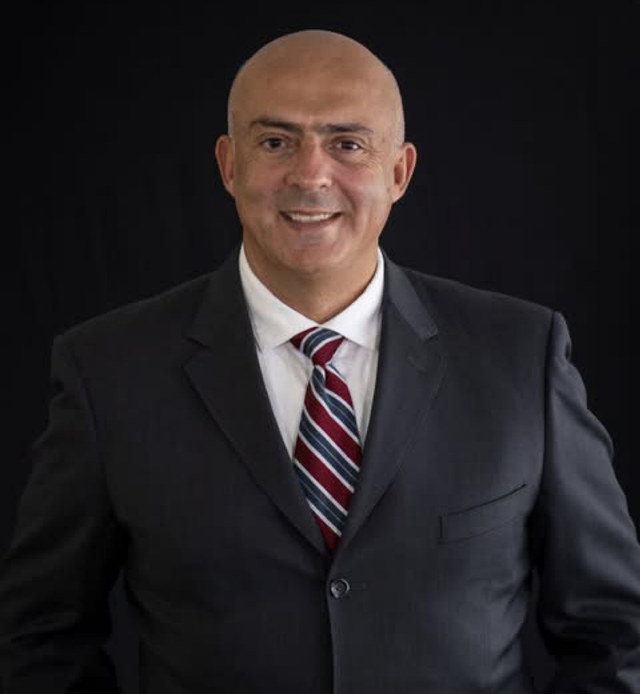
Jose Salloum is a Financial Security Advisor (conseiller en sécurité financière) certified by the Autorité des marchés financiers in Quebec, a Life and Accident & Sickness Insurance Agent licensed by the Financial Services Regulatory Authority of Ontario, and a Life Insurance Agent licensed by the Insurance Council of British Columbia. Licensed since 2001.
He has practised Infinite Banking since 2015 and founded Canadian Wealth Creation Centre Inc., which operates as IBC Financial, in 2016. He holds the Infinite Banking Concepts® Authorized Practitioner certification from the Nelson Nash Institute. That is a private certification rather than a regulatory licence.
IBC Financial is the education platform of Canadian Wealth Creation Centre Inc. This page is general education and not advice on any individual file.
Last reviewed 2026-09-15. By Jose Salloum, Financial Security Advisor.