
How does key person coverage differ from shareholder coverage?
They answer different questions and are sized by different arithmetic. One is arranged because the loss of a particular person would damage what the business earns, and it replaces earnings while the damage is repaired. The other exists to buy an owner's shares from an estate. A company can need both, one, or neither.
What kind of answer this is
- Claim type: Professional judgment
- Claim type: Requires another professional
- Jurisdiction: Canada wide
Which of the two a company needs, and in what amount, is a judgment made on that company's figures with its accountant. Nothing here sizes coverage for anyone.
How it works
each one taxed differently
Three ways to reach the value, often confused
- 01An advance, A withdrawal, A surrender
- 02The contractStays intact, under its terms; Value is removed permanently; Ends.
- 03The death benefitReduced while a balance is outstanding; Usually reduced, and not restored later; Ends with the contract.
- 04Can it be undoneYes, by repaying the balance; No, not by paying money back; No, and insurability may not be there again.
- 05TaxNot taxed when made, but it is a disposition; Amounts above the adjusted cost basis can be taxable; Amounts above the adjusted cost basis are taxable.
One amount is measured against earnings, hiring costs and the time a replacement takes to become useful. The other is measured against the value of a block of shares and the obligation to buy it. They rarely produce the same figure.
Step by step, two different people usually produce these two different numbers. The key person figure is typically estimated by the company's own management, often with its accountant, looking at lost revenue during a transition, recruiting costs for a replacement, and the time before that replacement becomes fully productive. The shareholder figure instead traces back to the value of the shares themselves, normally set by a formula written into a buy-sell agreement among the shareholders and reviewed periodically by an accountant or a business valuator, since it has to reflect what the company is actually worth and not what any one owner believes it is worth.
The insurer's own role in this is narrower than either calculation. Once an amount is requested, the insurer underwrites the insured individual for insurability and typically asks for evidence that the amount applied for is reasonable given the company's financial position, which insurers call insurable interest. The insurer does not tell the company which figure is correct for either purpose, and it will not revisit either calculation on its own initiative once coverage is issued. It confirms only that the amount requested is supportable at the time of application, leaving the underlying calculation entirely to the company and the professionals it retains.
The cost or the catch
the definition is the whole rider
The waiver of premium rider
- It keeps the contract in force without premiums
- It applies if the insured becomes disabled
- The contract's definition of disability is the whole rider
- An own occupation definition pays where a broader one does not
Now here's the key. The two get merged into a single contract that is asked to do both jobs, and when a claim arrives the money is spent once. A company that used its shareholder funding to survive a bad year has no funding left for the purchase it promised.
What varies from one company to another is not whether this confusion can happen, since the risk is structural, but how likely it is to happen without anyone noticing. A company that never wrote a formal buy-sell agreement, or wrote one years ago and never revisited the valuation formula in it, has no document stating which purpose a given death benefit actually serves. The contract itself is silent on the question too, since a policy pays a stated amount to a stated beneficiary and does not label that amount as earmarked for one use over the other.
The bad news is that this gap surfaces at the worst possible time, which is after a death, when surviving shareholders are negotiating a buyout while the company is also short a key employee and short the revenue that person generated. Disagreement at that moment about whether the proceeds were meant to fund the earnings gap or the share purchase is expensive precisely because it cannot be resolved by better arithmetic done after the fact. It needed resolving in the corporate minute book and the buy-sell agreement long before the claim ever arrived, while every shareholder was still alive to agree on the answer.
Having both needs costed separately, by the appropriate professionals, before deciding whether one contract or two separate contracts suits the company avoids a single amount trying to answer two different questions.
What varies from one company to another
The two figures also vary with facts specific to each company: the number of shareholders, whether those shareholders are also the people driving revenue, the valuation formula a given buy-sell agreement actually specifies, and how recently that formula was applied to real numbers rather than left as an untested clause. Two companies of similar size can arrive at very different figures for the same two purposes, because the underlying facts about who owns what and who does what differ between them.
The year matters as much as the company does, because both share value and key person cost drift over time in ways a policy sized once does not follow automatically. A coverage amount that matched the company's earnings and share value five years ago can badly undercount both today, particularly after a period of growth, and nothing about the insurance contract itself prompts a review unless the company builds that review into its own practice.
What to ask, and of whom
three mechanics, one of them fatal
How wealth actually crosses a generation
- 01What passes outside the estate by designation
- 02The deemed disposition that taxes almost everything else
- 03Whether the estate holds cash to pay that tax
- 04Selling assets to pay the tax is the common failure
The company's own accountant is the right party to produce a current estimate of both figures separately and in writing: the key person cost based on this year's numbers, and the share value based on the buy-sell agreement's own formula applied to the company as it stands now, not as it stood when the agreement was signed.
The lawyer who drafted, or who should draft, the buy-sell agreement is the other party to involve, and the specific question is whether that agreement states plainly which insurance proceeds correspond to which purpose. An agreement silent on that point leaves the same ambiguity this page describes sitting unresolved in the company's own records.
Who this matters to most, and least
two layers, both payable
What a wealth manager charges
- 01Mainly a share of the assets under management
- 02Hourly, flat fee and retainer structures also exist
- 03Funds held carry a management expense ratio of their own
- 04The two layers are separate and both are payable
It matters most to a closely held company with a small number of owner-operators who are also the people actually driving revenue, since the same individuals sit on both sides of the confusion this page describes, and a single contract sized without separating the two purposes is most likely to fall short of at least one of them when a claim arrives.
It matters least to a company with many shareholders, none of whom individually drives a meaningful share of revenue, or to a company with no buy-sell agreement requiring any shareholder to buy another's shares at all. In that second case, the shareholder coverage need may simply not exist, and applying this page's distinction to a company without that obligation answers a question the company was never actually asking in the first place.
What this page will not tell you
This page will not tell a specific company how much coverage it needs for either purpose. That figure comes from a valuation exercise done on the company's own numbers, by its own accountant or a business valuator, not from a general formula that could apply to companies of different sizes and structures equally. Understand that much and you will not be misled.
Nor does it advise on how the premium or the eventual benefit is treated for corporate tax purposes, a question governed by the Income Tax Act and by Canada Revenue Agency positions that turn on the specific facts of the company's structure. A company with that question owns it together with its own accountant, working from its actual corporate records rather than from a page written to describe the general shape of the two coverages.
It also does not draft, or check, the buy-sell agreement itself, a legal document with real consequences for every shareholder if it is unclear or silent on the points this page raises. That drafting belongs with a lawyer retained by the company, not with an insurance contract or a page describing one, however carefully either is written.
Where this answer may not apply
- A person can be both an owner and the reason the business earns, in which case the two amounts are added rather than compared.
- A lender may require coverage of its own, on its own terms, which answers neither question.
- In a business whose earnings depend on a licence held personally, the loss is not replaced by money at all.
- The tax treatment of the premium and of the proceeds is not the same for every arrangement, and a CPA settles it.
What to verify in your own contract
- What the business would lose in a year without that person, estimated from the accounts rather than from feel.
- Whether the shareholders agreement already obliges anyone to buy shares, and for how much.
- Who is recorded as owner and beneficiary on each existing contract.
- Whether any lender requires coverage, and whether an existing contract is already committed to it.
- What the accountant says about the treatment of each premium the company pays.
Continue to the full explanation
Prepare the questions for a CPA, a lawyer and an insurance professional.
Sources
- Income Tax Act, Justice Laws Canada, verified 2026-08-30
- The ownership, beneficiary and assignment provisions of the policy contract, insurer specific, verified 2026-08-30
About the author
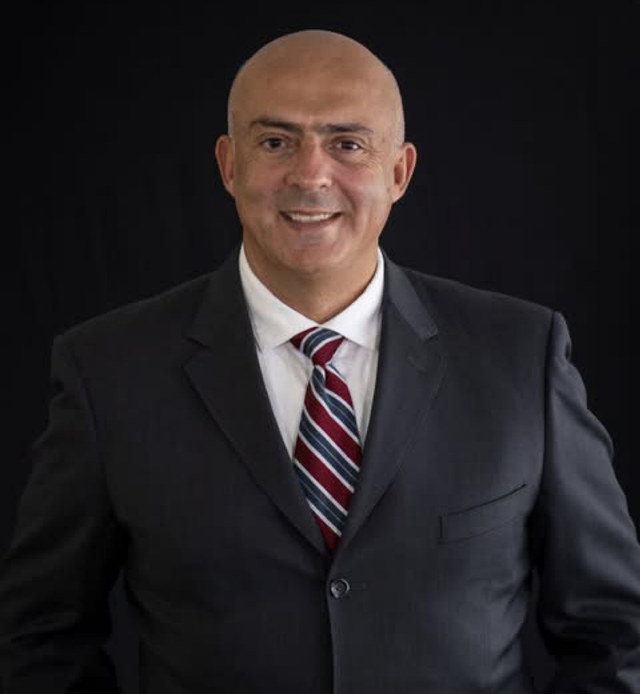
Jose Salloum is a Financial Security Advisor (conseiller en sécurité financière) certified by the Autorité des marchés financiers in Quebec, a Life and Accident & Sickness Insurance Agent licensed by the Financial Services Regulatory Authority of Ontario, and a Life Insurance Agent licensed by the Insurance Council of British Columbia. Licensed since 2001.
He has practised Infinite Banking since 2015 and founded Canadian Wealth Creation Centre Inc., which operates as IBC Financial, in 2016. He holds the Infinite Banking Concepts® Authorized Practitioner certification from the Nelson Nash Institute. That is a private certification rather than a regulatory licence.
IBC Financial is the education platform of Canadian Wealth Creation Centre Inc. This page is general education and not advice on any individual file.
Accountability and disclosure
- Written by
- Jose Salloum
- Professional capacity
- Financial Security Advisor. Canadian Wealth Creation Centre Inc., operating as IBC Financial, places business in six provinces: Quebec, Ontario, Alberta, British Columbia, Manitoba and New Brunswick
- Reviewed by
- Tax and corporate tier, reviewed by a qualified Canadian tax professional before publication
- Jurisdiction
- Canada wide
- Last reviewed
- 2026-08-31
- Version
- 2.1
- Compensation disclosure
- Canadian Wealth Creation Centre Inc., operating as IBC Financial, may receive insurer paid compensation if a policy is purchased. It takes the form of first year compensation followed by renewal compensation, and the amount varies by insurer, product, age, premium, contract design, riders and the arrangement with the managing general agency. No single figure would describe every contract honestly, and none is published here.
- Report a correction
- Info@ibcfinancial.com. Write without a policy number, medical information or account details.
Last reviewed 2026-08-31. By Jose Salloum, Financial Security Advisor.